The decision to remove a tree rarely feels simple. In a place like Streetsboro, where mature oaks, maples, and pines frame so many homes, taking one down can feel a bit like losing a part of the property’s history. People often wait until a storm drops a limb on the driveway or power line before calling for tree service, but by that point the tree has usually been sending warning signals for years.
I have walked more than a few yards in Streetsboro where homeowners apologized for “letting things get this far” while pointing at a leaning trunk or a thick carpet of mushrooms at the base. The truth is, most people are not trained to see structural issues in trees. You hire a mechanic for your car for the same reason you should work with a qualified tree service Streetsboro specialist for your trees: expertise, equipment, and experience with what can go wrong.
This article looks at how to recognize when a tree is past saving, when tree trimming or other care might be enough, and how a professional tree service like Maple Ridge Tree Care typically evaluates and handles tree removal in Streetsboro.
The emotional side: why people hesitate to remove a tree
Before getting technical, it helps to acknowledge why people stall on tree removal.
Trees provide shade, privacy, and a sense of permanence. That maple your kids climbed, the spruce visible in family photos, the big oak that came with the house 20 years ago, these are not easy to part with. There is also the cost factor. Professional tree removal Streetsboro services do not come cheap, especially for large, complex jobs.
Because of that, many homeowners focus on hopeful signs. “It still leafs out,” or “It survived the last windstorm.” Unfortunately, trees can be structurally unsound long before they stop producing leaves or flowers. The canopy can look “okay” while the root system or trunk is failing.
The goal is not to cut down every tree at the first sign of trouble, but to understand when the risk is no longer acceptable, and when there are practical alternatives like corrective tree trimming or cabling.
Clear warning signs a tree may need to come down
When I walk a property in Streetsboro or nearby neighborhoods, I look for a mix of visual, structural, and site-specific clues. No single issue always means removal, but patterns matter. Here are some of the stronger signals that it may be time to say goodbye.
1. A compromised trunk
The trunk is the main support column for the tree. When it fails, everything fails.
Large cavities, deep vertical cracks, or open seams in the trunk are all serious concerns. If I can see through a significant portion of the trunk, or if decay covers more than roughly a third of its circumference, the tree’s strength is likely reduced to the point where failure in a strong wind becomes far more probable.
Trees try to compartmentalize damage. You will often see a kind of ridge or calloused tissue around old wounds. That is a healthy response. The problem comes when decay keeps advancing inside the trunk faster than the tree can seal it off. On older silver maples in Streetsboro, for example, it is common to find hollow centers hidden behind a seemingly solid outer layer.
Shallow surface wounds are not always an emergency. But if you notice the trunk sounding hollow when tapped, deep mushroom growth on the bark itself, or splits that widen year after year, a professional inspection is overdue.
2. Significant lean, especially new lean
Not all leans are equal. Some trees naturally grow with a curve, especially if they reach for light around a structure or competing canopy. A tree that has leaned at the same angle for decades might be stable, even if it looks odd.
I start to worry when a tree develops a new lean or when the lean clearly increases over a few seasons. A fresh tilt after a storm or saturated ground is a red flag. Another warning sign is cracking or heaving soil on the side opposite the lean, or exposed roots lifting out of the ground. That suggests the root plate is moving.
In Streetsboro’s mix of clay and compacted fill soil, root anchoring can be unpredictable. A tree with a heavy sail-like canopy and a sudden lean over a house or driveway is not a candidate for “wait and see.” Even if the tree is technically alive and leafing out, the structural risk may justify removal.
3. Dead or declining crown
When a tree starts dying from the top down, you will often see “dieback” in the upper branches. This shows up as bare twigs, sparse foliage, or small branches snapping in mild winds. If more than 30 to 40 percent of the crown is dead, the odds of full recovery drop sharply.
Selective tree trimming can sometimes reinvigorate a declining tree by removing dead wood and reducing stress. But if the cause is severe root damage, a girdling root strangling the trunk, or a systemic disease such as Verticillium wilt in maples, removing dead branches is only cosmetic.
It becomes a judgment call. A mature oak with a single dead leader might be saved by careful pruning and cabling. A similar tree with multiple dead leaders, heavy decay, and poor root zone conditions next to a busy street might be better removed before nature does it in a less controlled way.
4. Root and base problems
Homeowners often focus on what they can easily see in the canopy. In my experience, the real trouble frequently starts at or below the soil line.
Fungal conks and mushrooms at the base of a tree can indicate root rot or decay in the lower trunk. Not every mushroom is a death sentence, but species that form hard, shelf-like brackets or large clusters right at the trunk base usually warrant serious attention.
Other root issues include major cut roots (often from past construction or driveway installation), soil piled high around the trunk, or trees that were planted too deeply. In the heavy, damp soils common in parts of Streetsboro, chronic saturation also weakens roots. A tall pine or spruce with a shallow, compromised root system is especially prone to uprooting in storms.
If you see a combination of base decay, exposed and damaged roots, and trunk cracks, you are likely looking at a removal candidate, even if the foliage seems relatively normal.
5. Location, targets, and risk tolerance
Tree health is only half the story. The other half is what the tree might hit if it fails.
A large, marginally healthy tree in a remote back corner of a property has a different risk profile than the same tree leaning over a bedroom or power line. Professionals talk about “targets” under a tree: structures, parked vehicles, walkways, play areas, or neighboring properties.
I often ask homeowners to imagine a worst-case failure. If the tree failed at the trunk, or dropped a major limb, what is in the fall zone? If the likely damage is a dented fence, many people choose to monitor the tree and invest in tree trimming to reduce risk. If the target is a child’s bedroom or the only power line feeding a home, the margin for error is far slimmer.
Every homeowner has a different risk tolerance. Part of the job of a tree service Streetsboro provider is to make sure you understand the risks clearly enough to make an informed choice.
When trimming or treatment is better than removal
Not every problematic tree needs to come down. There is a middle ground where thoughtful tree trimming, structural support, or cultural care brings the risk down to an acceptable level.
A few examples from local yards illustrate the trade-offs:
A mature red maple with one large dead limb over the driveway can often be made safe by removing that limb and thinning the canopy to reduce wind resistance. This is a straightforward tree service, and the tree keeps providing shade.
A healthy but slightly leaning oak near a house might benefit from weight reduction on the leaning side, selective pruning, and in some cases cabling of key branches. A qualified arborist will avoid aggressive topping and instead use structural pruning that respects the tree’s natural form.
Younger trees showing nutrient stress, early leaf drop, or minor pest activity often respond well to better watering practices, mulching, and soil improvement, rather than drastic cutting.
Tree removal becomes the preferred option when trimming only hides underlying structural failure or when the cost of repeated interventions approaches the cost of removal and replanting. A good tree service Maple Ridge Tree Care technician, or any reputable company, should be willing to say, “We can trim it, but here is why I do not think that changes the long-term risk much.”
Streetsboro specifics: soils, weather, and local stressors
Every region puts its own kind of pressure on trees. In Streetsboro and the surrounding Portage County area, several local factors show up again and again during tree inspections.
Clay-heavy soils are common, especially in newer subdivisions built on compacted fill. These soils drain poorly, leading to waterlogged root zones in wet periods and rock-hard conditions in dry spells. That kind of cycle stresses many ornamental and shade trees, particularly species that prefer well drained ground.
Freeze-thaw cycles and winter storms can also be hard on older trees. Ice accumulation on unmaintained, dense canopies is a recipe for broken limbs. Trees with pre-existing structural flaws usually fail first in heavy snow or wind, tree service Maple Ridge Tree Care which is why proactive tree trimming during calm seasons often pays off later.
Road salt near driveways and streets can burn roots and soil life along the edge of the property. Trees close to busy roads in Streetsboro often show dieback on the salt-facing side. Over years, that imbalance can create a structurally lopsided tree that is more vulnerable to wind failure.
Lastly, construction damage takes a toll. I have seen plenty of otherwise healthy maples and oaks start declining a few years after a driveway expansion, a pool install, or new foundation work. When heavy equipment compresses soil over a large part of the root zone, the tree may survive for a while, but its stability and vigor are compromised.
All of this means that what might be a minor concern in another region can be more serious here. Local experience matters when choosing a tree service Streetsboro homeowners can rely on.
A practical checklist: signs you should call a professional
This is the first of the two allowed lists.
- A noticeable new lean or a lean that has obviously worsened over a season Large dead branches over a house, driveway, sidewalk, or play area Deep cracks, cavities, or mushrooms on the trunk or at the base Significant dieback in the upper crown or limbs dropping in mild weather Soil heaving, exposed major roots, or past construction close to the trunk
If any of these sound familiar, it does not automatically mean the tree must be removed. It does mean that a qualified tree service Maple Ridge Tree Care or another experienced provider should evaluate the situation before the next storm does.
How professionals evaluate a tree for removal
When a technician from a tree service walks your property, they are balancing biology, physics, and risk. It is not just about whether the tree is technically alive, but whether it can remain safely and reasonably cost-effectively.
The assessment usually starts with a walk-around, looking at the root zone, trunk, and canopy from multiple angles. The arborist might tap the trunk with a mallet to listen for hollow spots, probe soft areas with a tool, or use binoculars to check high unions in the canopy.
Then comes context. They will note targets, property lines, access for equipment, slope, and soil conditions. A decaying tree in an open field requires a different strategy than the same tree shoehorned between a house and garage with power lines overhead.
They may ask about history. Has the tree been trimmed regularly, or was it topped years ago? Was there recent construction or trenching nearby? Do you remember when the decline started? These details can change the diagnosis.
Finally, you should expect a candid conversation about options: whether targeted tree trimming or cabling is reasonable, whether removal is strongly recommended, and what the relative costs and risks look like.
What the removal process typically looks like
Tree removal is not simply cutting at the base and yelling “timber.” In most residential Streetsboro neighborhoods, there is no safe open area for a whole-tree fall. The work is usually done in sections, using ropes, rigging, and in some cases bucket trucks or cranes.
This is the second and final allowed list.
- Site preparation: The crew identifies drop zones, moves vehicles, and protects structures or landscaping where possible. They assess wind and weather conditions for the day of work. Climbing and rigging: A climber or bucket operator moves into the canopy and begins removing smaller outer limbs first, often lowering them with ropes to avoid damage. Sectional removal: Larger limbs and trunk sections come down in controlled pieces. Rigging systems absorb the energy and guide the wood into designated landing areas. Ground work and cleanup: Once the main trunk is down, crews process the wood into logs or chip it. Brush is fed into a chipper, and the site is raked or blown clean of debris. Stump handling: Depending on your preference and the estimate, the stump is either cut close to ground level or ground out with a stump grinder to allow for replanting or landscaping.
Watching a skilled crew dismantle a large tree over a house is a reminder of why tree removal is not a do-it-yourself project for anyone but trained professionals with the right equipment and insurance.
Permits, utilities, and neighbor issues in Streetsboro
Before any cutting starts, it is worth checking on a few administrative and logistical items.
Some municipalities and homeowners associations have rules about removing trees, particularly in front yards or near property lines. Requirements vary, and they can change over time, so it is wise to confirm with the city or your HOA if there is any doubt.
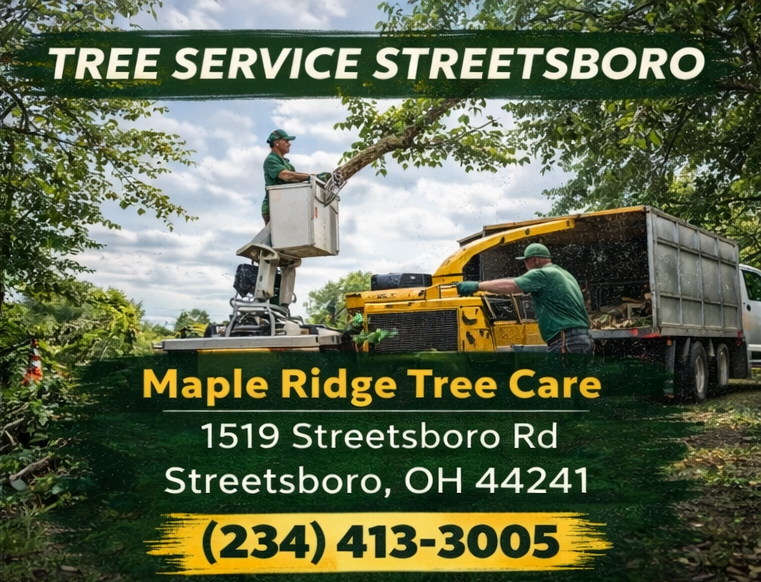
Utility lines introduce another layer. Power, cable, and phone lines in or near the canopy affect how a tree service Streetsboro crew will approach the job. In some cases, the utility company must be notified or involved. Cutting branches near live lines with improper technique can be deadly.
Neighbors sometimes have concerns, especially when large limbs hang over shared fences or garages. A thoughtful company will help you navigate those conversations, clarify where property lines and responsibilities lie, and document the scope of work so everyone understands what will happen.
A reputable tree service Maple Ridge Tree Care or similar local provider should handle underground utility locates, carry proof of insurance, and explain how they protect your property and surrounding properties before work begins.
Cost factors: why prices vary so much
Homeowners are often surprised by how different two estimates for tree removal Streetsboro can be. When you understand what drives cost, those differences make more sense.
Tree size is the obvious factor. Taller trees with larger diameters require more time, labor, and often heavier equipment. But structure and access are equally important. A medium tree overhanging a roof with poor access for equipment can be more complex and time-consuming than a larger tree in the open.
Species matters too. Dense hardwoods like oak are heavier than some softwoods. That affects how big each cut section can be and how much rigging is required. Brittle species with a history of limb drop, such as some older silver maples, can be more hazardous for climbers.
Other variables include the presence of decay (which can complicate climbing and rigging), proximity to power lines, and what you want done with the wood and stump. Full-service removal with stump grinding and haul-away naturally costs more than a basic felling and leaving the log sections stacked on site.
A legitimate tree service has overhead that fly-by-night operators often skip, including insurance, workers’ compensation, ongoing training, and proper equipment maintenance. Those costs buy you reduced risk of property damage, injury, or unfinished work.
After the tree is gone: stumps, roots, and replanting
Once a tree is removed, you face a new set of decisions. Many people underestimate how much a stump will bother them later. A low stump might seem fine at first, but it can become a tripping hazard, interfere with mowing, and sprout unwanted shoots.
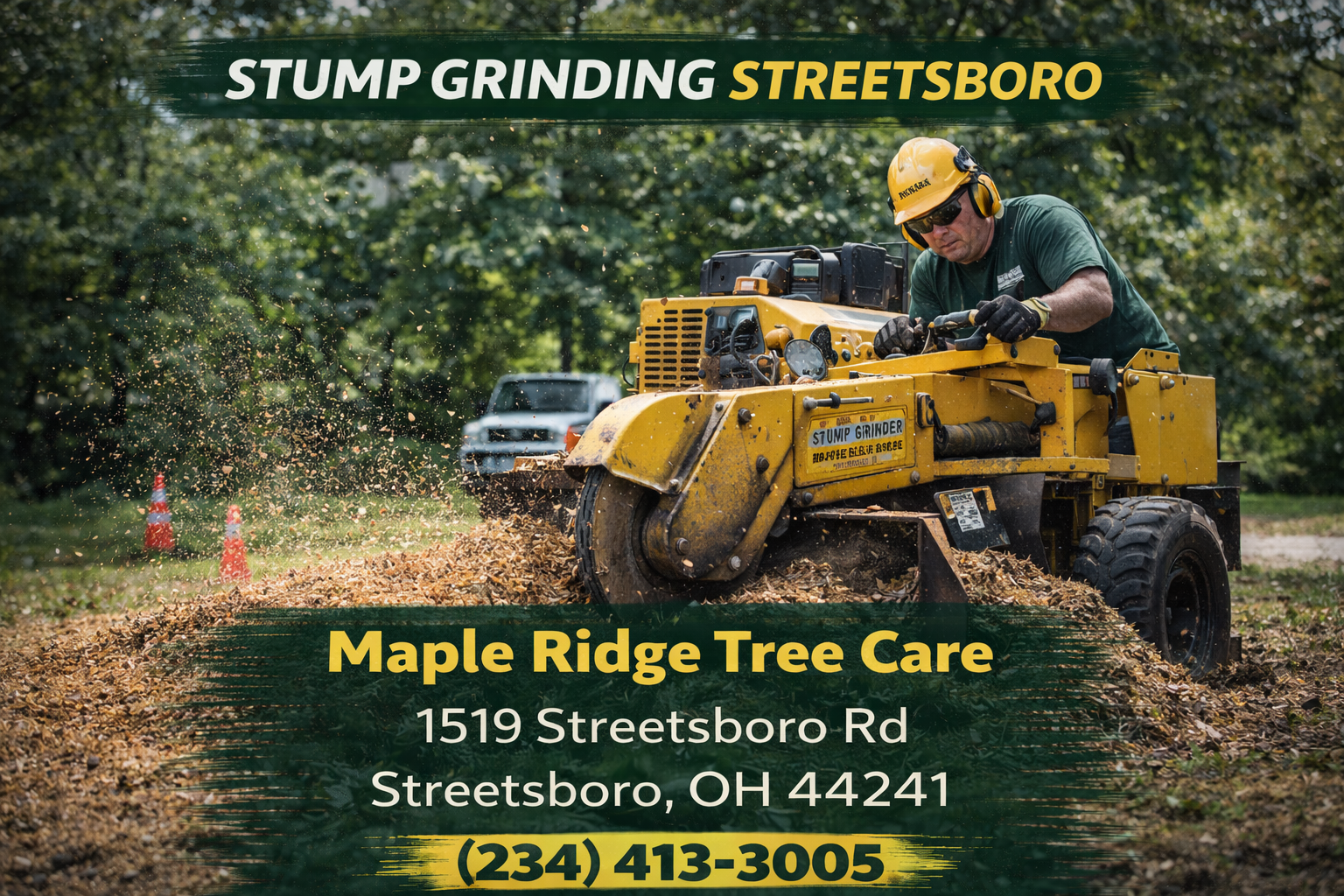
Stump grinding usually takes care of the visible portion and some of the upper roots, leaving a mound of grindings that eventually settles. In most cases, you can replant in the general area, though it is better to move a few feet away from the exact spot of the old trunk if possible.
Old roots stay in the soil and decay over time. That is normal and actually contributes to soil structure. Very large root systems from big removals, however, can create soft spots as they rot, which may matter if you plan to install a patio, driveway, or shed.
Replanting is the part many homeowners forget. If a mature tree provided afternoon shade or privacy, losing it can change how your house heats up, how comfortable your yard feels, and even energy bills. Planning a replacement, even if it is a smaller ornamental tree or a pair of staggered plantings, can restore those benefits in a more controlled and sustainable way.
Local knowledge helps here. A tree service Streetsboro professional can suggest species that tolerate local soil and weather, fit under utility lines, and mature to a size appropriate for your space. That beats planting a fast-growing species that becomes a new hazard in 15 years.
Choosing a tree service in Streetsboro you can trust
Tree removal and complex tree trimming require skill and judgment. When you call around in Streetsboro, do more than ask for the lowest price.
Ask about insurance and workers’ compensation, and request written proof. Confirm that the company has experience with the type of work your property requires, whether that is crane removals near structures, delicate pruning, or large stump grinding.
Pay attention to how they talk about your trees. A good provider, such as an established tree service Maple Ridge Tree Care crew or similar, will not push removal without explaining why. They will walk you through the trade-offs between saving a borderline tree and taking it down. They will also respect your budget and your attachment to the landscape, helping you prioritize the most urgent risks.
Finally, trust your instincts during the estimate. If someone appears rushed, dismissive of obvious hazards, or unwilling to answer questions, look elsewhere. You are hiring not just a crew with chainsaws, but a team you are trusting to manage heavy wood over your home and family.
Saying goodbye to a tree in Streetsboro can be hard, but it becomes far less stressful when you understand the warning signs, the local conditions, and the range of options between minor tree trimming and full removal. With a thoughtful assessment and a competent tree service at your side, you can manage risk, protect your property, and keep your landscape healthy for years to come.